
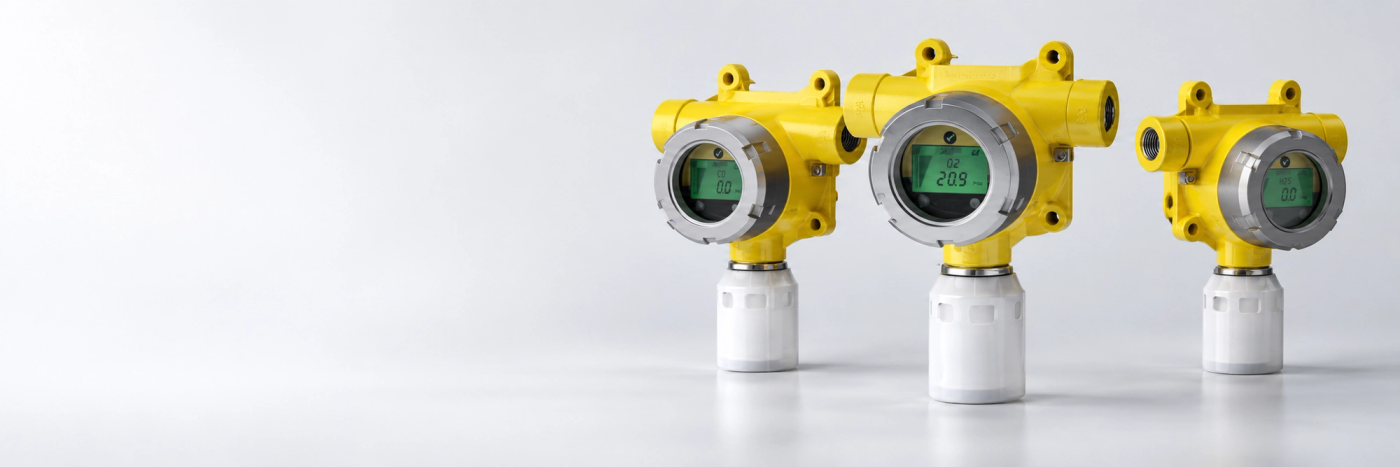
Honeywell Sensepoint XCD Gas Detectors
Complete Honeywell Sensepoint XCD fixed gas detectors with local display, 4–20 mA output and alarm/fault relays. Compare gas, sensing technology, enclosure material, entry thread and communication configuration—not sensor cartridges alone.
View productsSensepoint XCD complete detector kits
This first selection covers methane catalytic, methane IR, propane IR, oxygen and hydrogen sulfide configurations, each with aluminium or 316 stainless steel housing. All ten are ATEX/IECEx/AP M20 versions without the optional Modbus suffix.
Showing 1–10 of 10

Sensors and detection
Honeywell SPXCDALMFX Sensepoint XCD Methane Catalytic Gas Detector
SPXCDALMFX
New Original
$1,598.00
Sensors and detection
Honeywell SPXCDALMHX Sensepoint XCD Hydrogen Sulfide Gas Detector
SPXCDALMHX
New Original
$1,789.00
Sensors and detection
Honeywell SPXCDALMO1 Sensepoint XCD Oxygen Gas Detector
SPXCDALMO1
New Original
$1,789.00
Sensors and detection
Honeywell SPXCDALMPX Sensepoint XCD Propane IR Gas Detector
SPXCDALMPX
New Original
$1,981.00
Sensors and detection
Honeywell SPXCDALMRX Sensepoint XCD Methane IR Gas Detector
SPXCDALMRX
New Original
$1,981.00
Sensors and detection
Honeywell SPXCDASMFX Sensepoint XCD Methane Catalytic Gas Detector
SPXCDASMFX
New Original
$1,981.00
Sensors and detection
Honeywell SPXCDASMHX Sensepoint XCD Hydrogen Sulfide Gas Detector
SPXCDASMHX
New Original
$2,171.00
Sensors and detection
Honeywell SPXCDASMO1 Sensepoint XCD Oxygen Gas Detector
SPXCDASMO1
New Original
$2,337.00
Sensors and detection
Honeywell SPXCDASMPX Sensepoint XCD Propane IR Gas Detector
SPXCDASMPX
New Original
$2,657.00
Sensors and detection
Honeywell SPXCDASMRX Sensepoint XCD Methane IR Gas Detector
SPXCDASMRX
New Original
$2,363.00
Choose the gas and sensing principle first
The same display housing can contain different sensor technologies. Match the detector to the gas hazard and measurement scale.
Methane catalytic
Combustible-gas monitoring with a catalytic element and methane factory calibration. Oxygen availability and sensor poisons affect the measuring principle.
Methane or propane infrared
Two distinct NDIR characterizations for flammable gas in %LEL. Methane IR is not a hydrogen detector or a general linear hydrocarbon sensor.
Oxygen and hydrogen sulfide
Electrochemical sensors use different ranges and alarm logic: oxygen is a fixed 0–25% volume scale; H2S is a selectable ppm scale.
Read the complete XCD order code
Gas, enclosure, cable thread and digital communication are separate ordering decisions.
- 01
Aluminium or 316 stainless steel
The initial batch pairs each sensing configuration with LM25 aluminium and painted 316 stainless steel. The current manual lists approximate device weights of 1.7 and 3.7 kg respectively.
- Both are complete directly mounted transmitter-and-sensor kits.
- Replacement cartridge codes beginning SPXCDXS are separate service parts.
- 02
Keep regional supply and entry versions separate
These A-version configurations have two M20 entries and a 16–32 V DC supply specification. UL/NPT variants are different order codes.
- Do not transfer a 12 V minimum from the UL version into this first batch.
- The entry thread and approval family must match the installation.
- 03
Base analog/relay version is not Modbus
All ten selected codes provide a three-wire source/sink 4–20 mA output and three programmable relays. A final M identifies a factory Modbus option.
- Shared terminal drawings may show optional RS485 terminals.
- Do not infer an installed interface from a generic family description.
- 04
Apply the sensor performance conditions
Full-accuracy measurement ranges are separate from the broader enclosure certification temperatures. Calibration and weather-protection conditions also depend on the gas sensor.
- Oxygen measures deficiency/enrichment, not inertisation.
- The manual distinguishes oxygen and flammable weather-cup performance configurations.