
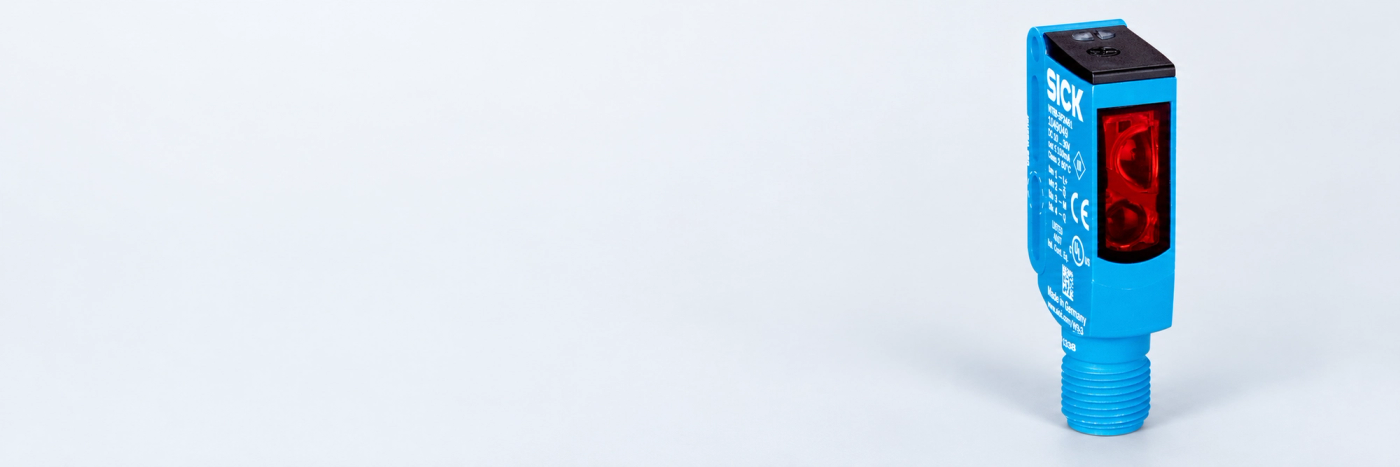
SICK W9 Miniature Photoelectric Sensors
SICK W9 miniature photoelectric sensors cover proximity, retro-reflective and through-beam detection. This initial selection focuses on WTB9-3 visible-red background-suppression sensors with PNP/NPN outputs and fixed cable, M8/M12 or pigtail connections.
View productsW9 photoelectric sensors
Start with WTB9-3 red-light background-suppression models. Compare output logic and connection first, then target reflectance, sensing distance and mounting space.
Showing 1–10 of 10
Sensors and detection
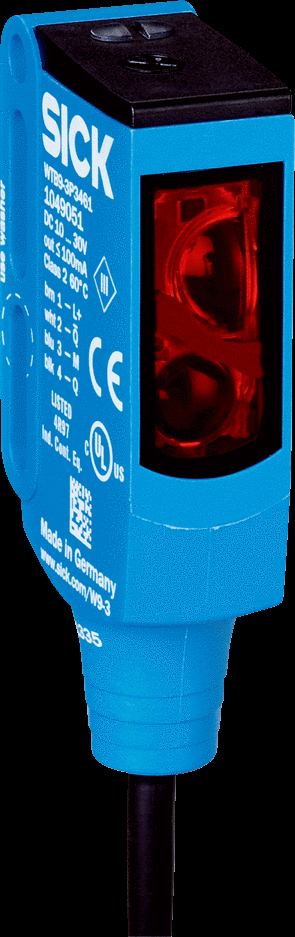
SICK WTB9-3N1161 W9 Background Suppression Sensor
WTB9-3N1161
New Original
$281.00
Sensors and detection
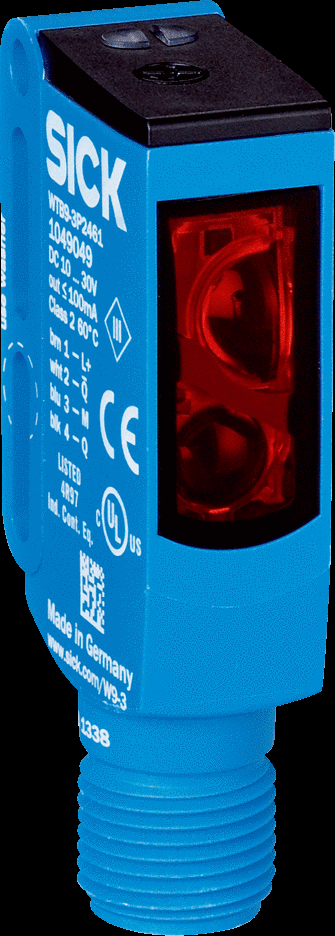
SICK WTB9-3N2461 W9 Background Suppression Sensor
WTB9-3N2461
New Original
$281.00
Sensors and detection
SICK WTB9-3N3461 W9 Background Suppression Sensor
WTB9-3N3461
New Original
$295.00
Sensors and detection
SICK WTB9-3P1161 W9 Background Suppression Sensor
WTB9-3P1161
New Original
$281.00
Sensors and detection
SICK WTB9-3P1261 W9 Background Suppression Sensor
WTB9-3P1261
New Original
$281.00
Sensors and detection
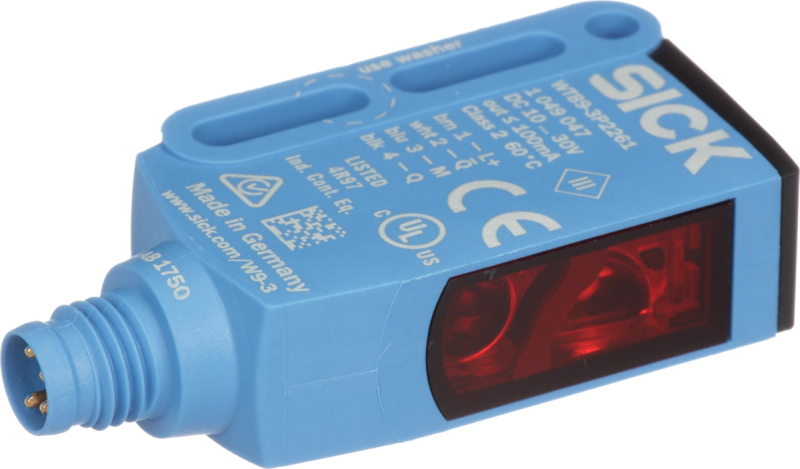
SICK WTB9-3P2261 W9 Background Suppression Sensor
WTB9-3P2261
New Original
$281.00
Sensors and detection
SICK WTB9-3P2461 W9 Background Suppression Sensor
WTB9-3P2461
New Original
$281.00
Sensors and detection
SICK WTB9-3P3161 W9 Background Suppression Sensor
WTB9-3P3161
New Original
$281.00
Sensors and detection
SICK WTB9-3P3261 W9 Background Suppression Sensor
WTB9-3P3261
New Original
$281.00
Sensors and detection
SICK WTB9-3P3461 W9 Background Suppression Sensor
WTB9-3P3461
New Original
$281.00
Choose the optical principle
W9 is a family of different sensing principles, not one interchangeable sensor. The first available selection uses background suppression.
WTB9-3: background-suppression proximity
One sensor detects the object’s reflected light and suppresses a more distant background. These initial red-light models reach 350 mm on a white reference target or 200 mm on black.
Other W9 principles
The wider manufacturer family also includes retro-reflective and through-beam configurations, as well as specialized optics. Those versions need their own range, reflector/receiver and output selection; they are not part of this first product batch.
Select by output, connection and target
Within this WTB9-3 subset, the electrical and mechanical ordering differences matter as much as sensing distance.
- 01
PNP, NPN or single output
P1161/P1261/P2261/P2461/P3261/P3461 provide complementary PNP outputs. N1161/N2461/N3461 provide complementary NPN outputs. P3161 provides one light-switching PNP output.
- PNP sources current; NPN sinks current.
- P3161 uses a 3-pin M8 pigtail, not a complementary 4-pin interface.
- 02
Fixed cable, integrated connector or pigtail
Choose a 2 m or 5 m fixed cable, a direct M8/M12 4-pin connector, or a 120 mm pigtail. A matching connector family does not cancel differences in pin count or output logic.
- Direct-connector models need a separately selected mating lead.
- Keep cable routing accessible and do not bend PVC cable below 0 °C.
- 03
Allow for target reflectance and temperature
The 20–350 mm figure uses a white target at 90% remission; black at 6% remission is rated 20–200 mm. At and above 50 °C, maximum output load falls from 100 mA to 50 mA.
- Use the five-turn potentiometer to set the switching distance.
- M3 mounting applies to these selected types; M4 versions have different order codes.
W9 technical resources
Family selection references; each product also includes its own exact data sheet.